
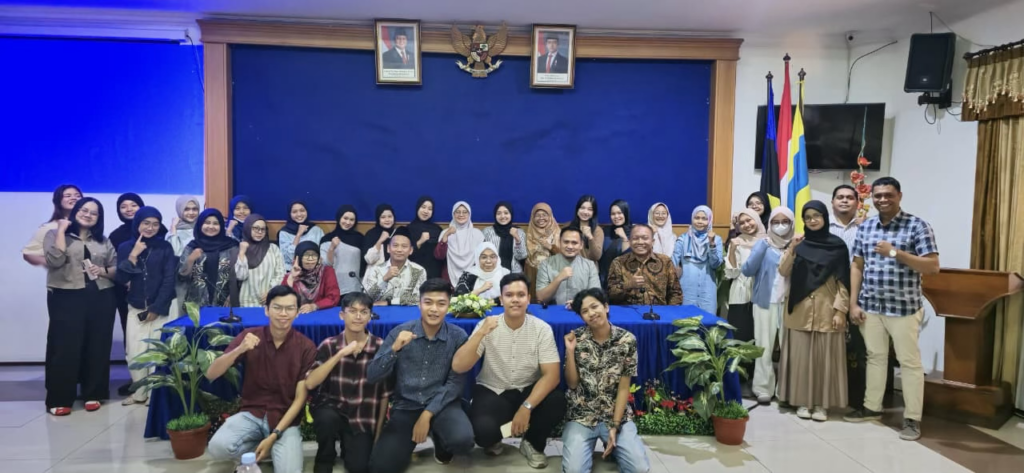
The Mathematics Guest Lecture at the Faculty of Science and Technology (FST), Universitas Airlangga (UNAIR) once again served as a platform for sharing knowledge and showcasing the latest developments in applied mathematics research. Held at the Faculty Meeting Room (RSF) on the second floor, the event was organized by the Department of Mathematics and featured two researchers participating in the Airlangga Post-Doctoral (APD) Domestic Program.
Faculty members and students from the undergraduate (Bachelor’s), master’s, and doctoral programs in Mathematics and Natural Sciences attended the event. The participation of attendees from various academic levels reflected a strong interest in the advancement of applied mathematics research.
The event was also attended by Prof. Dr. Fatmawati, M.Si., Vice Dean III for Research, Community Service, and Cooperation of FST UNAIR. As a professor and senior lecturer in the Department of Mathematics, she shared her insights on the importance of strengthening multidisciplinary research collaborations.
Her presence further underscored FST UNAIR’s commitment to promoting innovative and impactful applied research that addresses real-world challenges.
Mathematics for Epidemic Prediction and Food Security
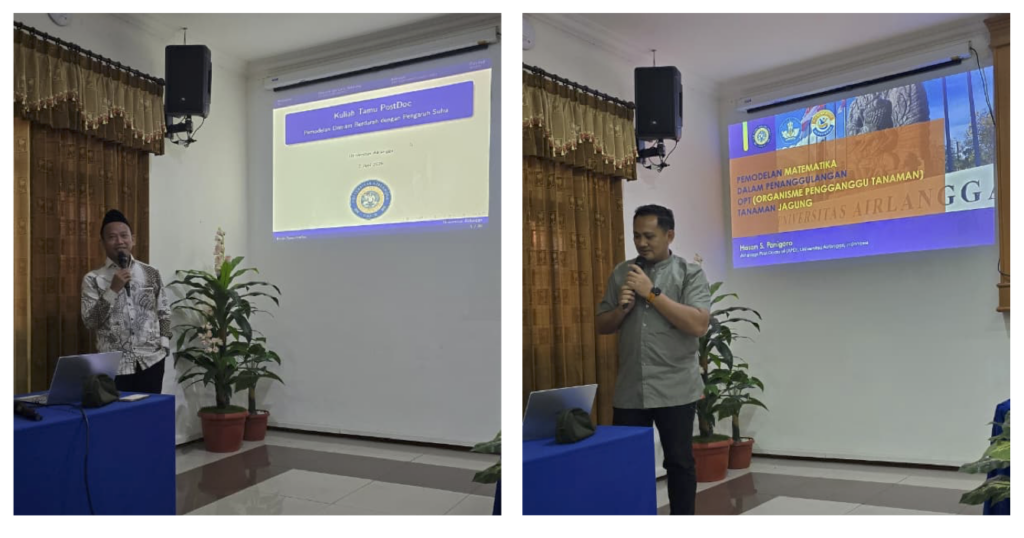
In the first session, Dr. Muhammad Abdurrahman Rois, M.Mat. from Universitas Islam Negeri (UIN) Walisongo Semarang presented his research on Dengue Hemorrhagic Fever (DHF) modeling. His study integrates environmental temperature effects into mathematical models of disease transmission.
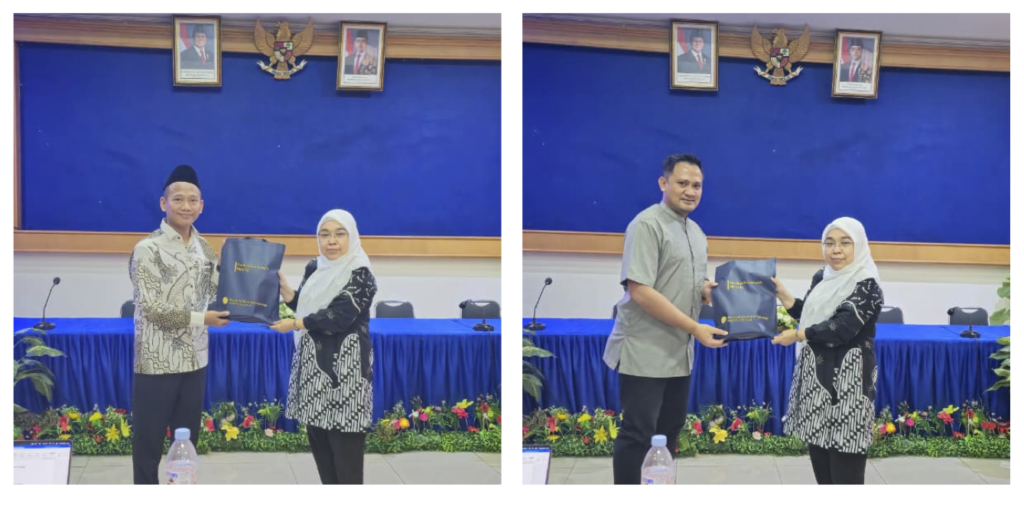
He explained several limitations of conventional epidemiological models. Subsequently, he introduced a novel approach by incorporating the Brière Function into a nonlinear differential equation system. This method enables researchers to analyze the influence of temperature on mosquito biting rates and the life cycle of Aedes aegypti mosquitoes.
As a result, the research has significant potential to support the development of a Mathematical Early Warning System. Such a system could assist public health authorities in predicting dengue outbreaks more accurately and effectively.
In the second session, Dr. Hasan Panigoro from Universitas Negeri Gorontalo presented his research in agricultural mathematics. His lecture, titled “Mathematical Modeling for the Control of Corn Crop Pests”, focused on addressing agricultural challenges through quantitative approaches.
During his presentation, Dr. Hasan demonstrated how mathematical models can support pest management through optimal control strategies. Furthermore, the models utilize data and simulations to generate more effective recommendations for farmers and agricultural stakeholders.
Through this approach, mathematics extends beyond theoretical inquiry. Instead, it provides data-driven solutions that contribute directly to national food security and sustainable agricultural development.
Interactive Discussion and Contributions to the SDGs
The event concluded with an interactive discussion and question-and-answer session. The speakers encouraged students to view mathematics as a powerful problem-solving tool capable of addressing complex societal challenges.
Moreover, both researchers demonstrated how optimal control strategies and numerical simulations can support evidence-based decision-making. Through these methodologies, mathematics contributes directly to public health and agricultural sectors.
Ultimately, the guest lecture reaffirmed the critical role of mathematics in advancing sustainable development. Mathematical research helps strengthen food security, improve public health outcomes, and support high-quality, adaptive higher education.
The topics presented during the event align closely with several United Nations Sustainable Development Goals (SDGs), particularly: #SDG 2 – Zero Hunger # SDG 3 – Good Health and Well-Being #SDG 4 – Quality Education #SDG 17 – Partnerships for the Goals